Why Is My Adult Tooth Loose? Causes and Treatment Options
A loose adult tooth can feel worrying, especially since permanent teeth are meant to stay firmly in place for life. If you have noticed a wobble while chewing or brushing, it is a signal worth paying attention to. In many cases, the tooth can still be saved if the cause is identified and treated early. This article explains the common reasons behind a loose tooth and the treatment options available.
Common Causes of a Loose Adult Tooth
Gum Disease (Periodontitis)
The most frequent reason adults notice a loose tooth is advanced gum disease. When plaque and tartar build up along and below the gumline, the gums become inflamed and the supporting bone gradually breaks down. As the bone level drops, the tooth loses its anchor and starts to shift or feel mobile.
Bone Loss Around the Tooth
Bone loss can happen due to long-standing gum disease, but also from poorly fitting dentures, certain medical conditions, or untreated infections near the tooth root. Once a significant amount of supporting bone is gone, the tooth has less structure holding it upright.
Trauma or Injury
A fall, sports injury, or accidental bite on something hard can loosen a tooth even if it looks intact. Sometimes the ligament fibres that hold the tooth in the socket get stretched or torn, causing temporary or lasting mobility. In more serious cases, the root itself may crack.
Bruxism (Teeth Grinding and Clenching)
Grinding or clenching, especially during sleep, puts repeated excess force on teeth. Over time this can loosen the ligament around a tooth or cause small fractures, making the tooth feel unstable even without visible gum problems.
Other Contributing Factors
- Untreated tooth infection or abscess weakening the bone around the root
- Hormonal changes, such as during pregnancy, that temporarily affect gum tissue
- Osteoporosis or other conditions that reduce bone density
- Smoking, which slows healing and worsens gum disease
How Dentists Diagnose the Cause
At a dental visit, the dentist checks the amount and direction of tooth mobility, examines the gums for swelling or bleeding, and usually takes an X-ray to see the bone level around the root. This helps rule out or confirm gum disease, bone loss, or a hidden fracture. If trauma is involved, the dentist will also check whether the tooth's nerve has been affected.
Treatment Options to Save or Stabilize a Loose Tooth
Deep Cleaning (Scaling and Root Planing)
When gum disease is caught in its earlier to moderate stages, a thorough deep cleaning below the gumline can reduce inflammation and allow the gum to reattach more firmly, often reducing mobility over time.
Splinting
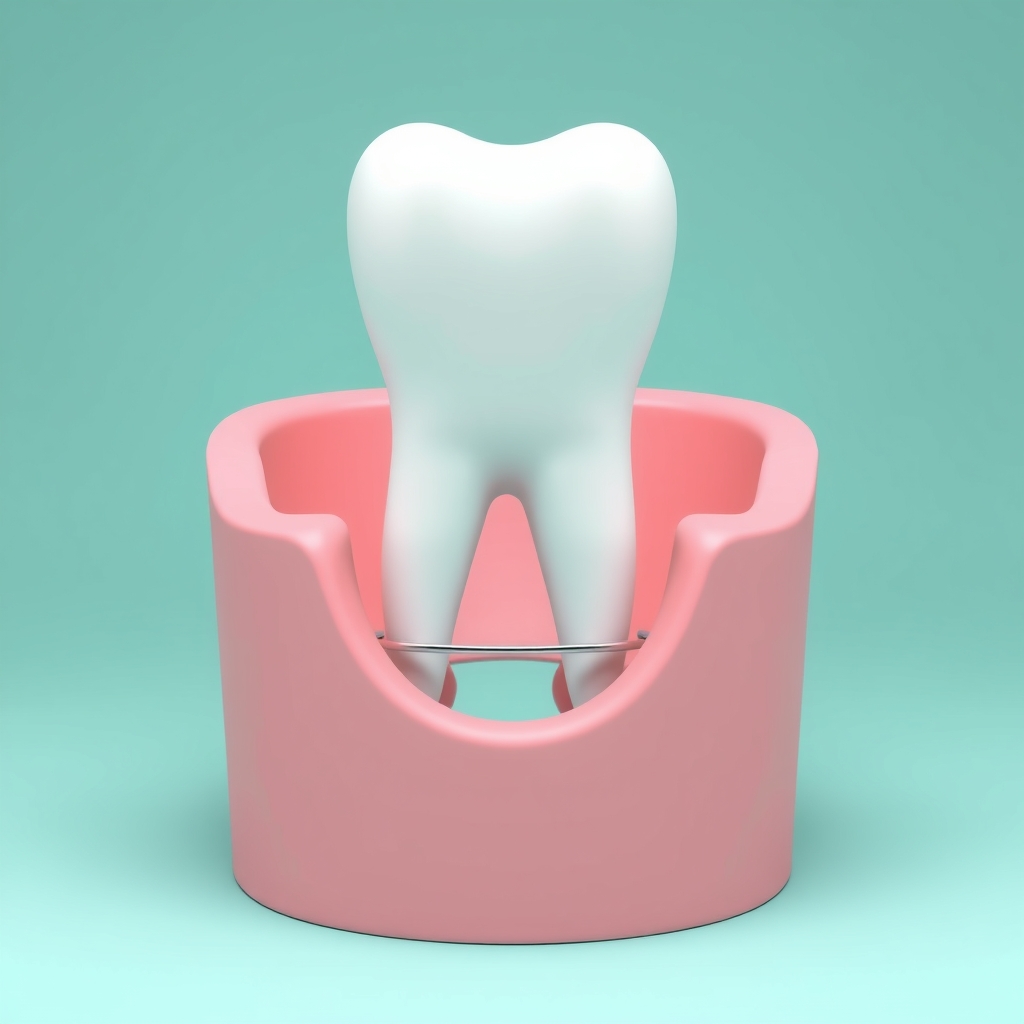
A dental splint joins the loose tooth to its neighbouring teeth using a thin wire or composite material on the inner surface. This spreads chewing forces across several teeth and gives the loose tooth time to stabilize, especially useful after trauma or in moderate gum disease.
Gum (Periodontal) Treatment or Surgery
For more advanced bone loss, procedures such as flap surgery or bone grafting may be recommended to clean deep pockets and support the remaining bone. These are aimed at slowing further loss and preserving the tooth for as long as possible.
Night Guard for Bruxism
If grinding is the main cause, a custom night guard reduces the force placed on teeth during sleep, protecting the loosened tooth and preventing further ligament strain.
Root Canal Treatment
If trauma or infection has affected the nerve, root canal treatment may be needed alongside splinting to save the tooth and resolve pain or swelling.
When Extraction Becomes Necessary
If bone support has been lost extensively or the tooth has a vertical root fracture, saving it may not be realistic. In such cases, extraction followed by an implant, bridge, or denture is discussed to restore chewing function.
| Treatment | Best suited for | Typical range (Indirapuram, Ghaziabad) |
|---|---|---|
| Deep cleaning | Early to moderate gum disease | ₹2,000 to ₹6,000 |
| Splinting | Trauma, moderate mobility | ₹3,000 to ₹8,000 |
| Gum surgery | Advanced bone loss | ₹8,000 to ₹25,000 |
| Night guard | Bruxism related looseness | ₹3,000 to ₹7,000 |
These figures are only a general guide for patients in Indirapuram, Ghaziabad. Final costs depend on the severity of the case and will be confirmed after an examination.
What You Can Do While Waiting for Your Appointment
- Avoid chewing on the loose tooth or hard foods on that side
- Do not wiggle or test the tooth with your tongue or fingers
- Keep the area clean with gentle brushing and warm salt water rinses
- Note when the looseness started and if there was any injury
A loose tooth is best treated sooner rather than later. With a timely diagnosis, many teeth in Indirapuram, Ghaziabad have been successfully stabilized and preserved through the treatments described above.
Have questions about your teeth?
Dr Urvashi Verma's Dental Clinic · Jaipuria Sunrise Plaza, Ahinsa Khand 1, Indirapuram
Frequently asked questions
Can a loose adult tooth tighten back up on its own?
Mild looseness caused by early gum inflammation can improve once the inflammation is treated. However, looseness from bone loss or a fractured tooth will not resolve on its own and needs professional care.
Is a loose tooth always a sign of gum disease?
No. While gum disease is a common cause, trauma, teeth grinding, and cracked teeth can also make a tooth feel wobbly. A dental exam and X-ray help identify the exact cause.
How urgent is it to see a dentist for a loose tooth?
It is best to get it checked within a few days, especially if there is pain, swelling, or the looseness followed an injury. Early evaluation improves the chances of saving the tooth.
Will I need to lose the tooth if it is loose?
Not necessarily. Many loose teeth can be stabilized with splinting, deep cleaning, or gum treatment. Extraction is usually considered only when the tooth is severely mobile with major bone loss.
Treatment costs mentioned on this page are indicative ranges for the Indirapuram, Ghaziabad region. Your exact cost depends on your case and will be confirmed after a clinical examination at the clinic.